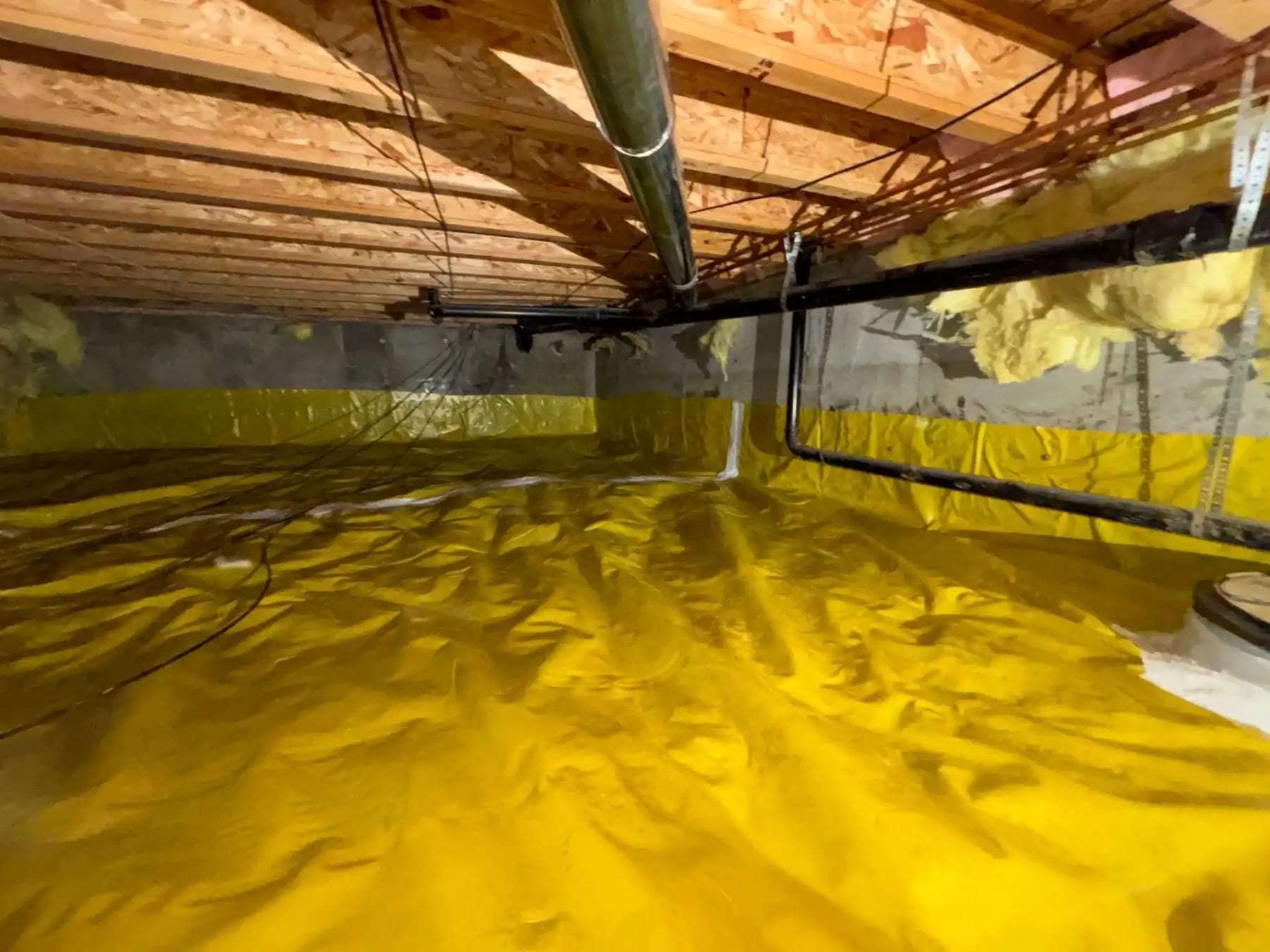
Crawlspace lined with a yellow vapor barrier up the foundation walls. Shown to illustrate the work described; not a job for this site or at any address named here.
Why this shows up in older west-metro houses
Evaporative coolers, usually called swamp coolers, have long been popular along the Front Range because summer air here is often dry enough for them to work well and they use less electricity than refrigerated air conditioning. Plenty of 1950s through 1970s ranches and split-levels around Lakewood still have a rooftop or window unit, sometimes alongside a newer central air system.
A swamp cooler pushes outside air across wet pads and into the house. That air is cooler and much more humid than what came in. Upstairs, with windows cracked as the manufacturer intends, the moist air flows through and out. Downstairs, where nobody opens windows and the concrete stays cold, it can linger, and relative humidity at the walls and floor creeps upward.
The cooler itself can also smell. Pads that stay damp between uses, a reservoir with standing water, or mineral scale can produce a stale, swampy odor that blows straight into the house. Owners sometimes blame the basement for what is really a neglected cooler.
Cooler odor or basement odor?
Both can be present, but they point to different fixes.
Odor from the cooler
- Strongest at the cooler vent the moment it starts.
- Smells swampy, fishy or like stale water.
- Disappears within hours of shutting the cooler off.
- Gets better after pads are replaced and the pan is cleaned.
Odor from the basement
- Strongest downstairs, often near walls or carpet.
- Smells like damp cardboard or old fabric.
- Fades slowly over days, not hours, after the cooler stops.
- Persists even with a clean cooler, especially after rain.
Adjustments worth trying
- Replace cooler pads at the start of each season and drain the reservoir when shutting down for the year.
- Keep an upstairs window open while the cooler runs so humid air has somewhere to go.
- Close basement supply registers or the basement door when the cooler is on, if your layout allows.
- Run a basement dehumidifier on cooler days and empty or drain it reliably.
- Check that the cooler's drain line and overflow do not discharge near the foundation.
- Cover and seal the cooler's opening in winter so cold drafts and debris do not come in.
When to rethink the setup
- IfBasement humidity rises well above about 50 percent every time the cooler runsLimit cooler use on humid days and dehumidify the lower level, or talk to an HVAC contractor about isolating the basement.
- IfThe cooler is old, leaks onto the roof or drips down a wallHave it inspected; a slow leak can wet framing and create a second odor source.
- IfOdor persisted after a full season without the coolerThe cooler is not the main cause. Return to the source walkthrough for the basement itself.
General information for Lakewood, not a quote or professional advice. In an emergency, call 911.