Musty split-level lower level
The family room in a 1960s split-level smells musty every summer, worse after rain, though there's no visible water.
Basements · Crawl spaces · Lower levels
A musty basement or crawl space is a clue, not just a smell. This guide helps Lakewood homeowners find what's causing it, understand how odor treatment works, and spot a moisture problem that has to be fixed first.
A Jefferson County guide to tracing basement and crawl space odors to their source before anyone treats them.
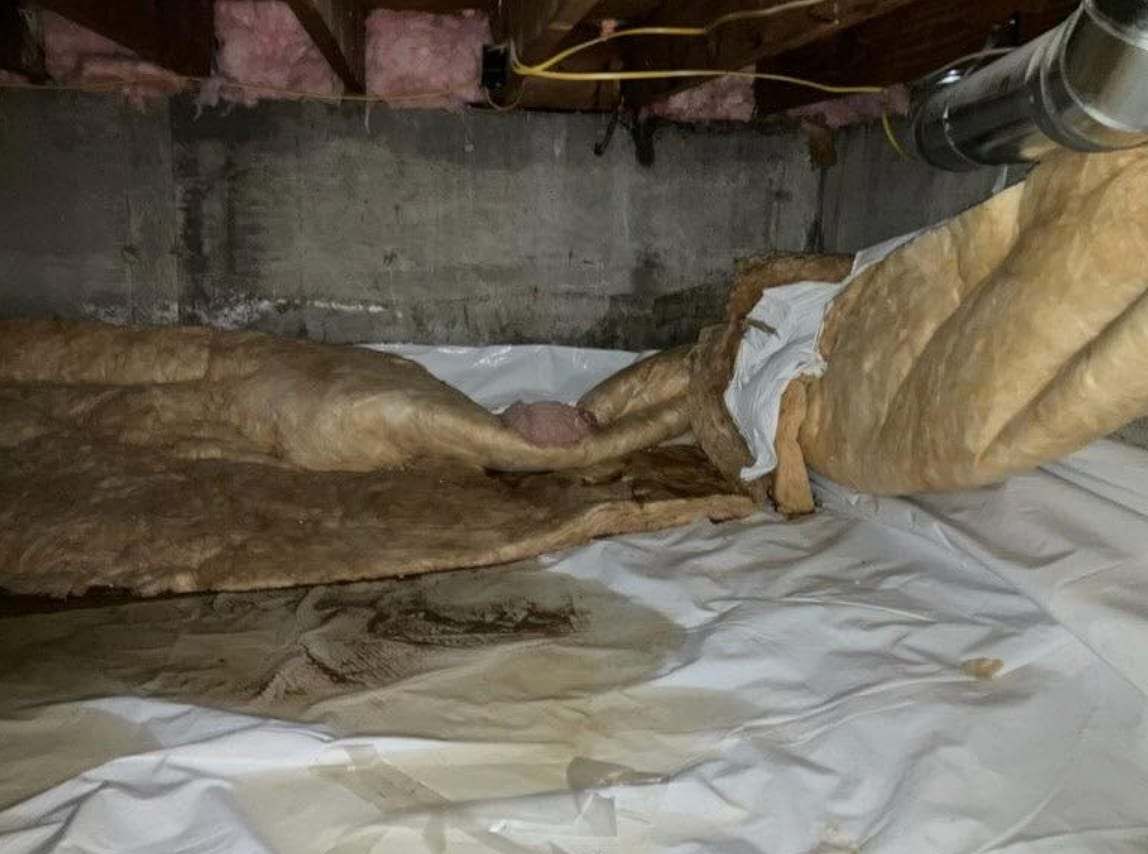
Musty and mildew odors are typically produced by microbial growth (mold and mildew) on materials that stay damp. In basements and crawl spaces, that dampness comes from humidity, condensation on cool walls and pipes, exposed soil, minor seepage, or past water events that were never fully dried. Cardboard boxes, carpet, insulation, and the paper face of drywall are common places for odor to develop.
Air from a crawl space doesn't stay there. As warm air rises through a house, it pulls air up from below through gaps around pipes, wiring, and ductwork, so a crawl space odor often shows up in the rooms above it. Effective treatment addresses the odor-causing residue and identifies the moisture conditions that would bring the smell back.
Air from a crawl space doesn't stay there.
Longer explanations, worksheets and local notes for Lakewood homes.
This is the first question, and it changes everything. Odor treatment can't fix active moisture. If something is wet, it has to be fixed first or the smell comes back.
Moisture first if you see…
Any of these points to a job for the right trade (waterproofing, drainage, plumbing or mold remediation) before anyone treats odor.
Odor treatment likely helps if…
Treatment focuses on both the odor and the conditions behind it.
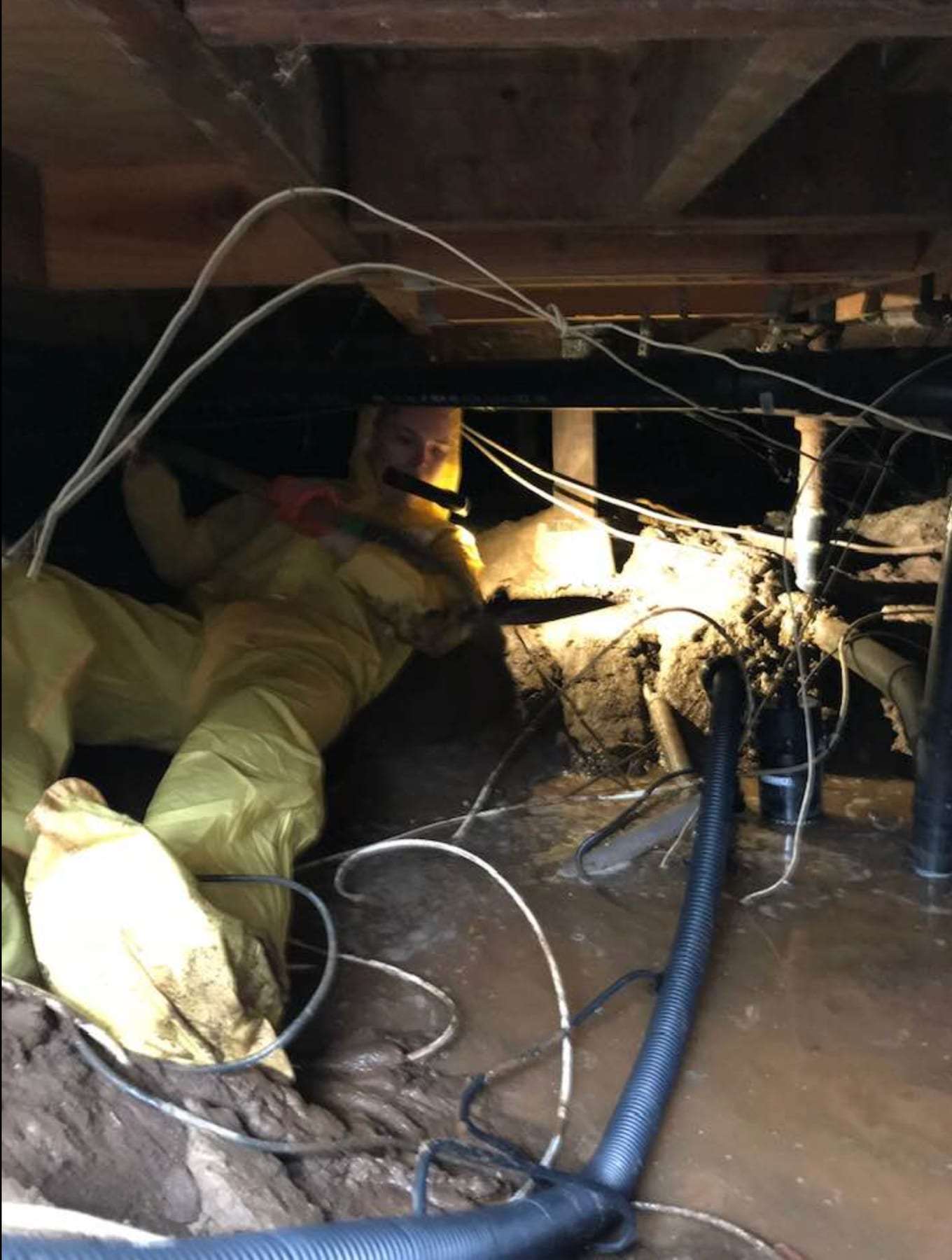
Inspect the basement and crawl space to find odor sources and signs of moisture or growth.
Identify which materials, like carpet, pad, insulation, or stored items, are holding odor.
Explain what can be treated and what moisture, vapor-barrier, or mold issues need correction first.
Apply odor treatment to affected materials and perform whole-space treatment, including air pathways.
Discuss dehumidification, vapor barriers, and storage changes that keep the smell from returning.
Lakewood, west of Denver in Jefferson County, has a large stock of ranch homes and split-levels built from the 1950s through the 1970s, many with basements, crawl spaces, or both. Over the years, some have had minor seepage, plumbing leaks, or humidity issues that left odor behind, and many crawl spaces were built without modern vapor barriers.
Colorado's climate is generally dry, but basements and crawl spaces stay cool, and summer humidity can condense on foundation walls and cold-water pipes. A dehumidifier, a sound vapor barrier, and good storage habits go a long way, and treatment removes odor that's already built up.
ZIP codes served: 80226 (Denver), 80232 (Denver), 80214 (Denver), 80215 (Denver), 80227 (Denver), 80235 (Denver), 80228 (Denver).
Also nearby: 80219, 80204, 80223, 80033, 80236, 80212, 80211, 80202, 80203, 80110, 80002, 80218, 80209, 80419, 80123, 80210, 80206, 80205.
Exposed soil or a torn vapor barrier in the crawl space letting ground moisture into the air.
High humidity in summer, when warm air meets cool foundation walls.
Old carpet or pad that got wet at some point and never dried completely.
Insulation in a crawl space that sagged, got wet, or was disturbed by animals.
Seepage at foundation cracks or window wells after storms.
An inexpensive hygrometer tells you more than your nose does.
Do
Don't
The family room in a 1960s split-level smells musty every summer, worse after rain, though there's no visible water.
A ranch home with a crawl space and no vapor barrier has a damp, earthy smell in the hallway and bedrooms above it.
A water heater leaked two years ago and the carpet was dried with fans, but the musty smell never left.
This form is not connected. This website is a draft preview: no business has been confirmed to receive requests, so the fields below are switched off and nothing can be sent. In an emergency, call 911.
Often, musty odors come from mold or mildew growth somewhere, even if it isn't visible. It can also come from damp materials, bare crawl space soil, or a dry drain trap. An inspection helps find the cause.
No. Odor treatment addresses smell. Active mold growth should be removed through proper remediation, and the moisture source corrected. A careful odor provider should tell you if that's needed first.
Warm air rising through a home draws air up from the crawl space through gaps in the floor and around ducts and pipes. Whatever the crawl space smells like, the rooms above eventually do too.
If the odor came from a sudden covered event, such as a burst pipe that flooded the crawl space, related cleanup may be covered. Odor from gradual humidity or seepage usually isn't. Ask your insurer.
Keeping indoor humidity roughly between 30% and 50% helps limit mold and musty odors.
Whole-space treatments may require occupants to stay out of the treated area for a period. Ask for specific timing before scheduling.
A common cause is a dry floor-drain trap. The U-shaped trap holds water that blocks sewer gas; if the drain is rarely used, the water evaporates and gas comes up. Pour a gallon of water into the drain. If the smell fades within a day, that was it. If it doesn't, a plumber should check for a cracked vent or line.