How good insulation goes bad
Fiberglass batts with a kraft-paper face were the common choice for insulating floors over crawl spaces for many years. They are held up by staples through the paper flange, by wire supports, or sometimes by nothing more than friction. Over time, staples rust, the paper tears, and gravity wins. Batts sag away from the subfloor or fall completely onto the ground.
Once a batt touches soil or a damp vapor barrier, it wicks moisture. Fiberglass itself does not feed mold, but the paper face, dust trapped in the fibers and anything organic that collects there can. Wet insulation also stops insulating, so the floor above gets colder, which in turn raises the chance of condensation on the subfloor.
Rodents and other small animals like insulation for nesting. Droppings and nest debris add their own strong odor, and they are a health concern to handle carefully. If a crawl space shows signs of animal activity, that changes how cleanup should be done.
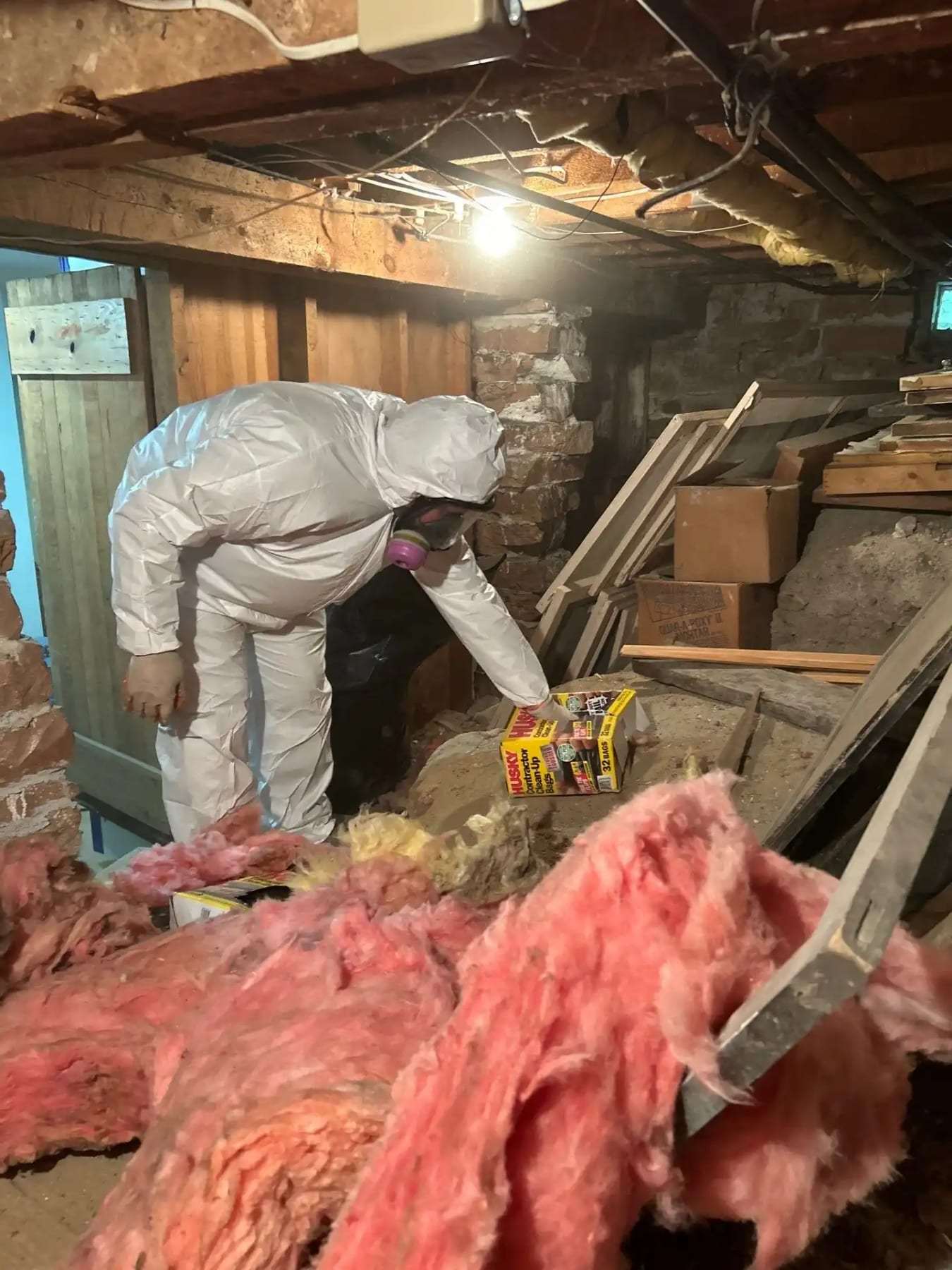
Technician in a protective suit removing wet insulation in a stone-walled crawlspace. A representative photo of the task, not a record of work at any particular property.
What you might see and what it usually means
| Observation | Likely meaning | Usual next step |
|---|---|---|
| Batts hanging loosely from joists | Staples or supports have failed | Re-support or replace once the space is dry |
| Batts lying on the soil | Fallen and probably damp | Remove and dispose of; do not push back up |
| Dark streaks or spots on the paper face | Moisture and possible mold growth | Remove; check the wood above for growth |
| Tunnels, nests or droppings | Animal activity | Professional cleanup with protective gear; seal entry points |
| Insulation dry and tight to the subfloor | Not the main odor source | Look at soil, walls and ducts instead |
A sensible order of work
- Control the moisture first.Install or repair the ground cover and fix drainage problems so the space can dry. New insulation in a wet crawl space will fail the same way.
- Remove damaged material.Bag fallen, wet or soiled insulation and take it out through the hatch. Wear a well-fitted respirator, gloves and long sleeves; fiberglass is an irritant.
- Inspect the framing.With insulation down, check joists and the underside of the subfloor for staining, growth or soft wood.
- Deal with odor on the wood and soil.Clean or treat surfaces that hold odor once they are dry, then ventilate or dehumidify as recommended.
- Choose the new insulation strategy.Some owners re-insulate the floor; others insulate the crawl space walls and treat the space as part of the house. Each approach has trade-offs worth discussing with a contractor.
Questions for a crawl space contractor
- Will you remove all of the old insulation or only the visibly damaged batts?
- How will you handle any droppings or nests you find?
- Do you recommend insulating the floor or the walls in this crawl space, and why?
- What has to happen to the ground cover before new insulation goes in?
Common questions
- Is old crawl space insulation ever asbestos?
- Fiberglass batts are not asbestos, but some older homes have pipe wrap or other materials that might contain it. Do not disturb suspect material; have it tested by a qualified professional first.
General information for Lakewood, not a quote or professional advice. In an emergency, call 911.